


If you click on my affiliate/advertiser links, Big Top Kids Gifts (aka Lisa Woods) will receive a
small commission 😉 The products and services I recommend are ones that I believe will benefit you.
Starting a new school year can feel overwhelming for children with autism. The changes in routine, new environments, and sensory challenges make this transition especially tough for many families.
The right sensory-friendly strategies can turn back-to-school time around for kids with autism. Research shows that the right sensory tools boost focus by 78% and lower classroom anxiety by 65% when you use them consistently.
You can make this school year different by prepping your child with techniques that work. From creating personalized sensory supports to building strong school partnerships, these strategies help your child feel ready to learn.
The key is to start early and tweak your approach to fit your child’s unique needs. No one-size-fits-all here.
Preparing Autistic Children for the School Transition
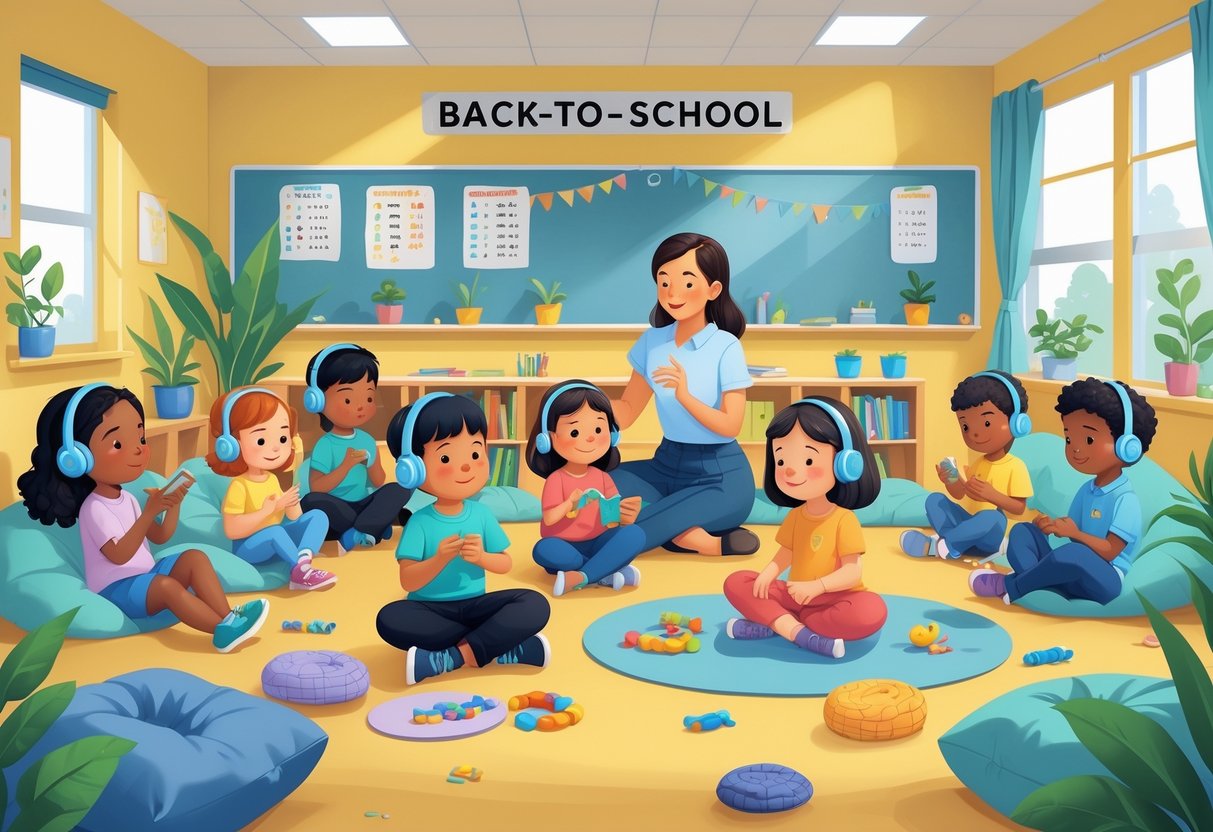
Starting the school year takes planning and slow, steady prep for autistic children. Predictable routines, gradual schedule tweaks, and practice school visits can really help lower anxiety and build confidence.
Building Predictable Routines at Home
Morning routines are the backbone of a smooth school day. Start practicing your child’s school morning routine about 2-3 weeks before the first day.
Create a step-by-step morning checklist that covers:
- Wake-up time
- Getting dressed
- Eating breakfast
- Brushing teeth
- Packing backpack
- Walking to the car or bus
Use visual schedules with pictures or symbols for each step. Many autistic kids understand visuals way better than just hearing instructions.
Practice the evening routine too. Prep clothes, pack the backpack, and stick to a steady bedtime.
Social stories work wonders for explaining routines. Write simple lines like “I wake up at 7:00 AM” or “I eat breakfast before getting dressed.”
Keep routines the same every day while practicing. Even small changes can stress out kids who rely on predictability.
Gradual Schedule Adjustments
Sleep schedule changes need to happen slowly. Move bedtime and wake-up by about 15 minutes earlier every few days until you hit the school schedule.
Start practicing the school day timeline at home. If school starts at 8:00 AM, wake your child at that time—even during summer break.
Meal timing matters too. Shift breakfast, lunch, and snack times to match school hours over a week or two.
Try a practice school day at home. Do structured activities like sitting at a table for 20-30 minutes with puzzles or coloring.
Reduce screen time if your child won’t have much tech access at school. Swap screens for school-like tasks, such as following visual schedules or practicing fine motor skills.
Familiarization Visits and Practice Runs
School visits before the first day help kids get used to the new space. Call the school and try to visit during quieter times.
Walk through your child’s daily route:
- Entrance to the building
- Path to the classroom
- Location of bathroom
- Cafeteria or lunch area
- Library and gym
Take photos during the visit of important spots and people. Use these for a visual story about the school day.
Meet the teacher and staff if you can. Building relationships with educators early really helps your child feel supported.
Practice the transportation routine. If your child rides the bus, check out the bus stop and maybe meet the driver. For car drop-off, practice the route and parking.
Time the visits to match the real school schedule. Go in the morning so your child experiences the same lighting and activity levels they’ll see on a regular day.
Personalizing Sensory Supports and Tools
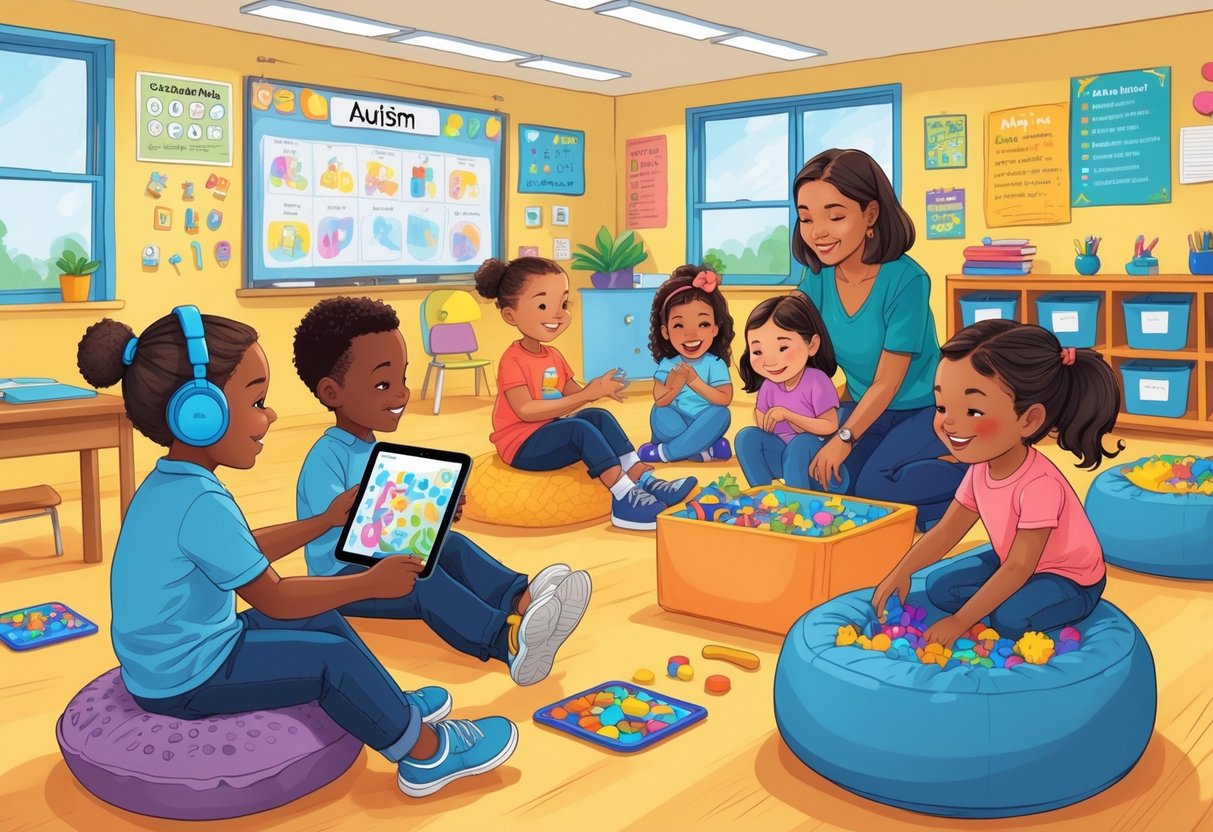
Every child with autism has their own sensory needs that call for different tools and strategies. Success comes from matching the right sensory-friendly school supplies to your child’s challenges and making these supports part of the daily routine.
Selecting Sensory-Friendly School Supplies
First, figure out your child’s main sensory triggers and preferences. Does loud noise bother them? Noise-canceling headphones can be a lifesaver in cafeterias and assemblies.
If your child craves movement, fidget toys and wobble cushions give them the input they need. For kids who like pressure, weighted lap pads offer calming deep touch during seated activities.
Writing struggles often improve with special pencil grips that ease hand fatigue. Chewable jewelry helps kids who need oral input do so safely.
Think about age when picking tools. Younger kids might love colorful fidgets, while older ones want something more subtle.
| Sensory Need | Recommended Tools | Best Use |
|---|---|---|
| Sound sensitivity | Noise-canceling headphones | Loud environments |
| Need for movement | Fidget toys, wobble cushions | Desk work |
| Seeking pressure | Weighted lap pads | Circle time, reading |
| Writing struggles | Pencil grips, alternative tools | All written tasks |
[amazon box=”B001SN8HOY,B01LWYWH43,B0D8J9SB59,B08HGN7MNT” grid=”5″]
Integrating Sensory Tools Into Daily Routines
Build sensory supports into your child’s day right from the start. Pack fidget tools in their backpack so they’re handy during transitions.
Create a personalized sensory toolkit that travels between home and school. Toss in some backup items in case something gets lost—because it happens.
Morning prep should include sensory input activities. Heavy work, like carrying a weighted backpack, can help your child regulate before school begins.
Plan sensory breaks during the day. Use timers to remind your child to use their tools before things get overwhelming.
Talk to teachers about when and how your child uses sensory supports. Make sure these tools are in the IEP or 504 plan so they’re officially allowed.
Matching Supports to Individual Sensory Needs
Watch your child’s sensory patterns. Do they seek or avoid certain textures, sounds, or movements? That info guides your tool choices.
Sensory seekers need input-providing tools—stress balls, textured surfaces, and movement options. Sensory avoiders do better with things that block input, like noise-reducing headphones and soft fabrics.
Some kids have mixed needs—maybe they love pressure but hate loud sounds. Put together a toolkit that covers a few sensory systems.
Try each tool for a bit to see what works. Start with just one or two so your child doesn’t get overwhelmed.
Work with occupational therapists to figure out which sensory supports help the most. They often have great brand and strategy suggestions.
Creating Comforting Sensory-Friendly Spaces
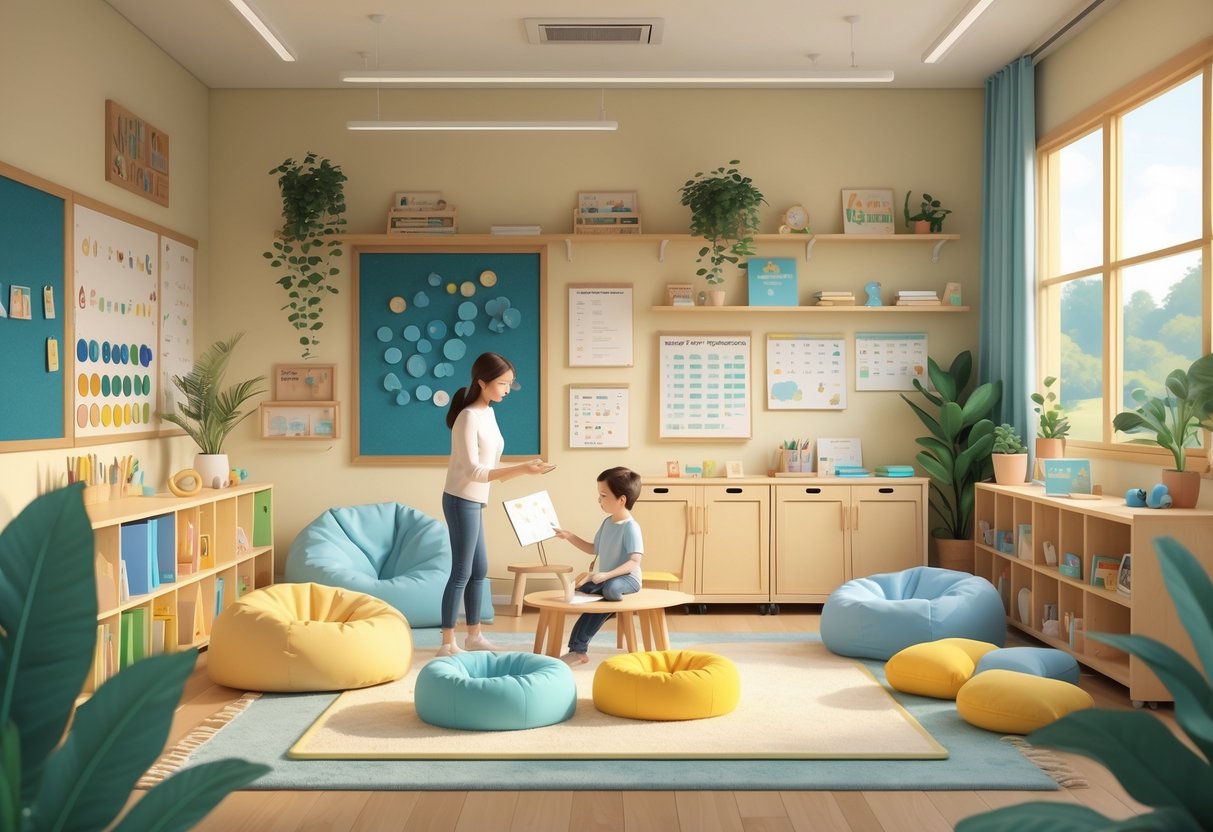
Schools need areas where kids with autism can regulate their emotions and sensory needs. These spaces should have quiet zones for retreat and flexible seating for different preferences.
Designating Quiet Retreat Areas
Every classroom should have a calm-down spot where students can go when they feel overwhelmed. Set this up away from busy zones and distractions.
Sensory boxes with calming items help in anxious moments. Fill them with noise-canceling headphones, fidget toys, and stress balls.
Key items for quiet areas:
- Soft lighting or battery candles
- Weighted blankets and lap pads
- Textured fabric swatches
- Bean bag chairs or floor cushions
Set up visual boundaries using dividers or curtains. This shows students the space is separate from regular classroom activities.
A weighted lap pad can give deep pressure input that many kids with autism find calming. They can use these without leaving their seat.
Keep the area tidy to avoid visual overload. Organize sensory tools in small bins and rotate items now and then so things stay interesting.
Flexible Classroom Seating Options
Standard desks and chairs just don’t work for every student with autism. Flexible seating options help meet different sensory and attention needs.
Some great alternatives:
- Exercise balls for movement
- Standing desks for active learners
- Rocking chairs for calming motion
- Floor cushions for sitting on the ground
Arrange desks away from windows and doors to cut down on distractions. This can help students focus on what’s happening in the classroom instead of the hallway or outside.
Try swivel chairs that allow controlled movement. Many kids with autism need that proprioceptive input to stay focused.
Tennis balls on chair legs cut down on scraping noises—a little hack that makes a big difference for sensitive ears.
Let students pick their seats based on how they’re feeling that day. Some days they might need to move more, other days they might want something stable and supportive.
Using Visual Supports and Communication Tools
Visual schedules give structure and cut down on anxiety for autistic kids during school transitions. When families and educators communicate clearly, kids get more consistent support wherever they are.
Establishing Visual Schedules for Predictability
Visual schedules make time visible and help kids see what’s coming next at school. Try making these schedules about 2-3 weeks before school starts.
Essential elements for effective visual schedules:
- Pictures or icons with simple words
- Put them at your child’s eye level
- Update them daily and get your child involved
- Keep the format and timing consistent
Start with a home morning routine before adding in the whole school day. List out things like breakfast, getting dressed, and packing up.
If your child struggles with transitions, try a “first-then” board. For example, show “First math, then snack time” using clear visuals.
Visual supports are vital communication tools and work best when you use them both at home and school. Go over the schedule together every day to help your child get used to it.
Incorporating Communication Methods With Educators
Share info about your child’s communication needs and visual supports with teachers before school starts. Make a simple one-page summary explaining how your child likes to communicate.
Include these key details:
- Visual supports your child already uses
- Preferred ways to communicate
- Signs your child’s overwhelmed or frustrated
- What helps your child calm down
- Triggers to avoid
Meet with teachers and support staff to show how your child uses visual tools. Demonstrate what works well at home so they can try it at school.
Ask that sensory strategies get written into IEP or 504 plans so everyone’s on the same page. This helps keep things consistent and clear for all staff.
Find out what visual supports the school already uses. Some classrooms might already have picture schedules or boards that can work with your child’s home routines.
Collaborating With School Teams and Developing Plans
When families and school teams work together, sensory-friendly education gets a lot easier. Coordinating support plans and keeping communication open helps everyone use autism-specific strategies more effectively.
Coordinating IEP and 504 Plan Supports
Your child’s IEP or 504 plan needs to include specific sensory accommodations that fit their needs. Work with the special ed team to write down which sensory tools, break times, and changes to the classroom help most.
Key sensory accommodations to request:
- Noise-canceling headphones or ear defenders
- Fidget tools and tactile objects
- Alternative seating, like stability balls
- Scheduled sensory breaks every 20-30 minutes
- Lower lighting or desks away from windows
Write down your child’s sensory triggers and calming strategies in detail. Note when breaks are most helpful, like before transitions or after lunch.
Creating sensory-friendly classrooms takes ongoing training and teamwork from everyone involved. Set up regular IEP meetings to check what’s working and make changes if needed.
Ask all teachers and support staff to get training on your child’s sensory plan. That way, your child gets the same support in every classroom and activity.
Facilitating Ongoing Parent-Teacher Communication
Set up regular check-ins with your child’s teacher to talk about sensory strategies and what they notice day to day. Weekly emails or quick calls can help spot patterns and tweak supports fast.
Keep a simple communication log to track your child’s sensory needs at home and school. Share things like sleep changes, diet shifts, or stressful events that might affect how your child feels.
Regular communication and sharing strategies keep things consistent. Make sure everyone knows what to do if there’s a meltdown or if new triggers show up.
Effective communication tools include:
- Daily behavior charts
- Photos of successful sensory setups
- Short videos of calming techniques
- Shared digital folders for strategy updates
Ask teachers to let you know right away if sensory accommodations aren’t working. Quick heads-ups help you fix little problems before they turn into big ones.
Promoting Independence and Self-Regulation
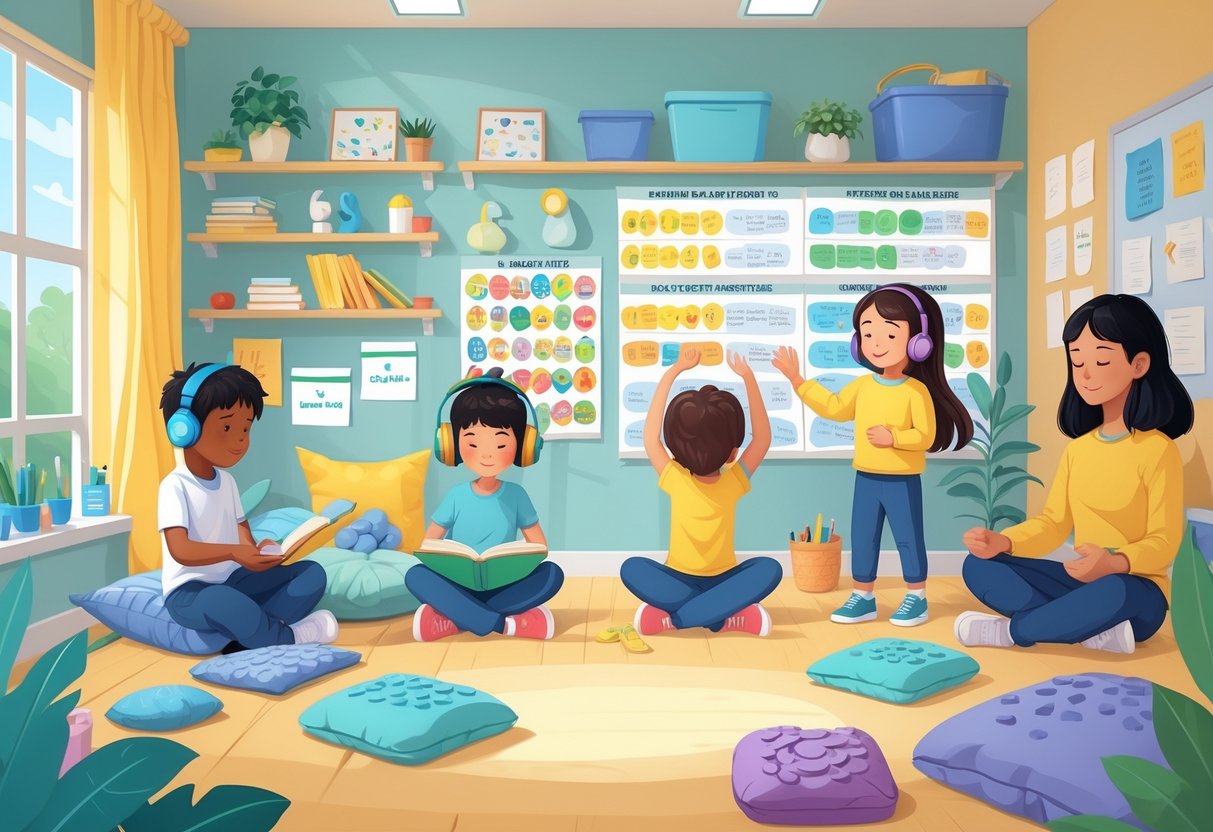
Building self-advocacy skills and solid routines helps autistic kids handle their sensory needs and gain confidence at school. These habits lay the groundwork for long-term success and let kids rely less on adults.
Teaching Self-Advocacy Skills
Teaching your child to speak up about their sensory needs is super important for school. Start simple, with phrases like “I need a break” or “This is too loud.”
Practice role-playing at home. Show your child how to ask for their sensory tools or request a quiet space when things get overwhelming.
Make a visual card system with pictures for different needs, like “need movement,” “too bright,” or “feeling calm.”
Key self-advocacy phrases to teach:
- “I need my headphones.”
- “Can I take a sensory break?”
- “The lights are bothering me.”
- “I’m feeling overwhelmed.”
Work with teachers to set up clear signals your child can use. A hand gesture or card system works well, especially for non-speaking kids.
Self-regulation strategies help kids notice how they’re feeling. Teach your child to spot when they’re calm, excited, frustrated, or tired.
Building Morning and After-School Routines
Consistent routines help lower anxiety and make daily transitions smoother for autistic kids. Try starting your morning routine 15 minutes early so you’re not rushed.
Make a visual checklist for each morning step. Use pictures for things like getting dressed, eating breakfast, packing up, and grabbing sensory tools.
Essential morning routine elements:
- Wake up at the same time every day
- Put visual schedules at eye level
- Add calming sensory activities
- Pack comfort and fidget items
- Review the day’s schedule together
After-school routines give kids time to decompress. Plan 20–30 minutes of quiet time right after school before homework or other activities.
Set up a calm-down spot with soft lighting and familiar textures. This helps your child settle after a busy day.
Use timers and visual cues for transitions. This builds independence and cuts down on constant reminders from adults.
Frequently Asked Questions
Parents and teachers usually have a bunch of questions about sensory-friendly strategies for autistic students. Here are some practical tips for making school work better and handling daily challenges.
How can parents help prepare their autistic child for a new school year?
Start getting your child ready at least two weeks before school starts. Gradual transitions just work better for autistic kids.
Create a visual schedule for mornings, the school day, and after-school time. Use pictures and simple words your child understands.
If you can, visit the school before the first day. Walk the hallways, find the classroom, and meet the teachers to help ease anxiety.
Practice the routine at home. Move wake-up and bedtime 15 minutes earlier each day until you hit the school schedule.
Read social stories about a typical school day. Include stuff like lunch, recess, and what happens in class.
What are some effective strategies for creating a sensory-friendly classroom environment?
Cut down on visual clutter—organize stuff in labeled bins. Too many decorations can overwhelm autistic students.
Set up a quiet corner with soft lighting for breaks. Add things like bean bags, weighted blankets, or noise-canceling headphones.
Use natural light whenever possible. Fluorescent lights can be rough for kids with sensory sensitivities.
Mark clear boundaries for different classroom areas. Tape on the floor or arranged furniture can help show where things happen.
Keep noise low during work times. Try using visual signals instead of talking when you can.
What should teachers know about sensory sensitivities in autistic students?
Every autistic student’s sensory needs are different. Some crave sensory input, while others avoid it completely.
Loud noises, bright lights, strong smells, and unexpected touch are common triggers. Watch for things like covering ears, squinting, or moving away from certain areas.
Sensory overload might look like meltdowns, shutting down, or acting out. It’s not a discipline issue—it means the child needs support.
Giving teachers a sensory snapshot helps. Include triggers, calming strategies, and early warning signs.
Let kids know ahead of time about fire drills, assemblies, or schedule changes. Sudden loud noises or surprises can be tough.
What types of sensory tools can aid an autistic child in focusing during school hours?
Fidget toys like stress balls, textured strips, or little manipulatives can help with focus. Pick things that won’t distract the whole class.
Noise-canceling headphones or earplugs help with loud, busy places like cafeterias or hallways.
Weighted lap pads offer calming pressure during sit-down activities. Keep them around 10% of your child’s body weight.
Chewable jewelry or pencil toppers are good for oral sensory needs. They’re much safer than chewing on random stuff.
Chair bands or foot fidgets let kids move while staying in their seats. These are great for kids who need to wiggle to focus.
What role does a consistent routine play in supporting children with autism at school?
Predictable routines can lower anxiety for autistic kids. When they know what’s coming up, it’s a lot easier for them to manage their emotions and behavior.
Visual schedules make invisible time concepts visible. Stick schedules up at eye level so kids can spot them whenever they need.
Let kids know about schedule changes ahead of time. Try countdown timers or just a simple heads-up, like saying, “Five more minutes until cleanup time.”
Stick to the same transition times. Using the same signal or song to switch activities helps a lot.
Plan regular sensory breaks during the school day. These breaks can stop overload before it sneaks up.
How can peers be educated to foster an inclusive and understanding school community for students with autism?
Talk to classmates about differences, but don’t single anyone out. Let them know that everyone’s brain just works a little differently, and honestly, that’s completely fine.
Try to focus on what kids have in common, not just what’s different. Most children will find shared interests or experiences if you give them the chance.
Show students how to interact in ways that feel respectful. Maybe demonstrate how to get someone’s attention or offer help without being awkward about it.
Give kids structured chances to hang out together. Pair them up for activities where they’re likely to do well as a team.
If you see teasing or someone getting left out, step in right away. Make it clear that everyone deserves respect and a little kindness.
Don’t forget to celebrate what autistic students bring to the table. Sometimes that’s a sharp eye for detail, honesty, or even a quirky special interest that livens up the classroom.


